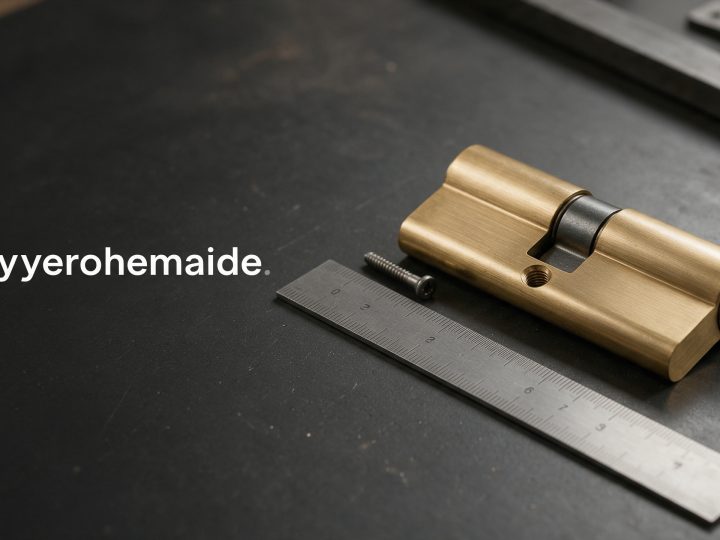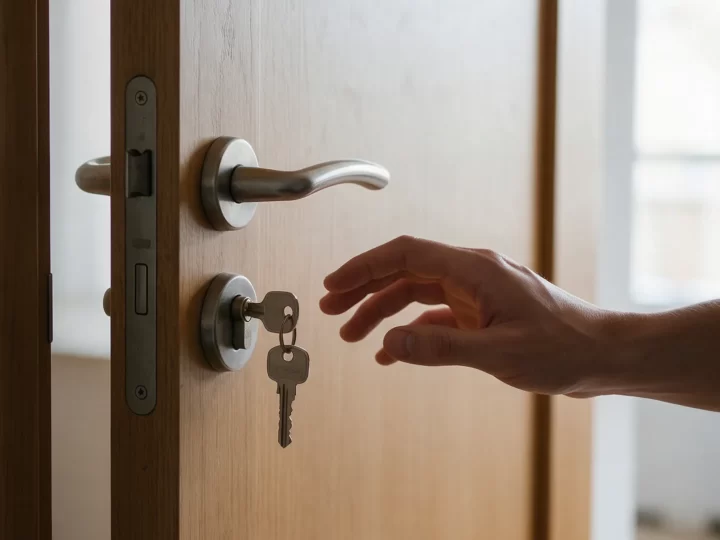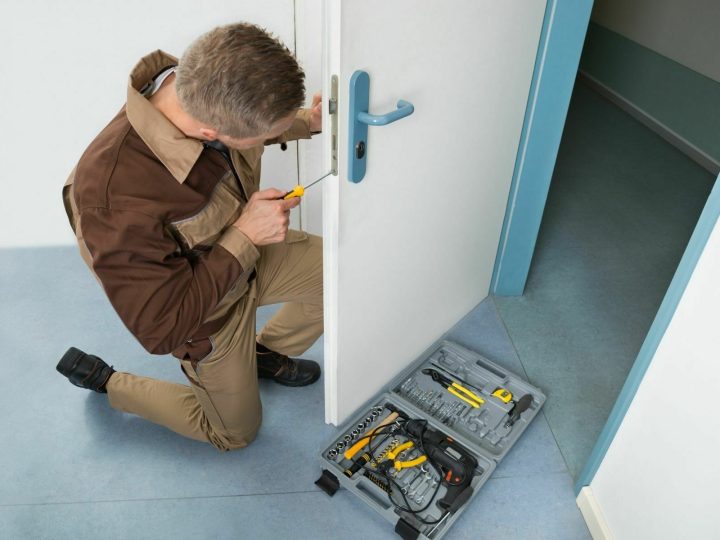
If a key has broken inside your lock, do not turn the piece you are holding or insert another key. Stop, keep the broken part and look without touching the keyway to see whether a fragment remains. If the door is open, leave it open. If it is closed and you cannot get in, describe the situation to a locksmith before trying an improvised fix. The aim is not to remove the metal at any cost: it is to regain access without turning a small fault into a damaged cylinder.
Three details change the answer: whether anyone is at risk, where the fragment is and whether the door is still open. This short decision guide helps you assess those details without asking for personal information or teaching lock manipulation.
IMMEDIATE GUIDANCE
Find the next safe step
A few quick decisions. This tool does not attempt to open the lock or send your answers anywhere.
First, check safety and access
A key can snap while turning, while being withdrawn or even outside the cylinder. These are different problems. Before deciding what to do, set the loose piece aside so nobody reinserts it. Note whether the door is open, whether any metal protrudes from the keyway and whether the key had been turned to lock the door before it broke. You do not need to touch the fragment to report any of this.
If there is smoke, fire, a medical emergency or a vulnerable person you cannot reach, the mechanism is not the priority: call 112. If the only problem is a locked door, 112 is not a substitute for a locksmith. Making that distinction directs each situation to the right service.
An exterior photo of the hardware can help identify the type of entrance. Keep the address, flat number and documents out of frame. You do not need to show the inside of your home, security codes or a complete key profile that could be copied. If the broken part is in your hand, retain it: it may help identify the key type and establish whether an authorised replacement is possible.
A useful rule: if a test requires force, putting an object into the keyway or shutting the door to see what happens, stop. The extra information is rarely worth the risk of making the fault worse.
Where is the broken piece?
A fragment remains inside the cylinder
This is the situation most likely to deteriorate after a blind attempt. A small movement can drive the piece deeper, obstruct another key or leave the cylinder in a position that is difficult to assess. A visible tip does not guarantee an easy removal: the length of the fragment, the position of the plug and the key profile all matter. From outside you also cannot tell whether the break itself is the whole problem or whether the key snapped because the mechanism was already resisting.
If the door is open, keep it that way. If it is closed, do not assume that removing the metal alone will solve everything. The professional may also need to restore access and test the lock afterwards. A precise account of what happened is more useful than a list of internet tricks you have already tried.
Both pieces are outside the lock
This is not the same as a trapped fragment. Keep both pieces and do not use the snapped key to test the lock. If you have an intact spare and the mechanism turns normally, you may use it without force. Stop if you feel resistance, uneven movement or find that you must lift the door to make it close. A broken key can indicate wear, door misalignment or resistance elsewhere in the mechanism; no single cause can be confirmed without examination.
The next step is not automatically a new cylinder. Sometimes an inspection and an authorised replacement key are enough; in other cases, a repair or replacement part may be appropriate. Assessment comes before a quote, and a quote should make its scope clear.
You cannot tell whether anything is inside
Do not insert wire, tools or a second key to find out. Your phone’s light may let you look at the opening from outside, but visual inspection has limits too. If you cannot see clearly, simply say that you cannot confirm whether a fragment remains. A professional can distinguish a lodged piece from a bent key or another cylinder fault after examining the hardware.
An open door and a closed door call for different decisions
With the door open, you have one important advantage: there is no need to put access at risk to experiment. Leave it open until you have a working lock and an intact key. If children, pets or the activity inside require the doorway to be controlled, arrange safe, supervised temporary access first. Do not leave the entrance unattended just to follow an online guide. Then you can arrange inspection without unnecessary pressure.
With the door closed, it matters whether it merely latched as you left or was locked with turns of the key. Another legitimate, safe entrance also changes the picture. Do not try opening methods from a video or allow anyone to work on the door without establishing their professional identity and the proposed scope. When asking for help, give the town, the door type as far as you know, whether the fragment is visible and whether you are inside or outside. A locksmith can discuss travel and an initial price scenario without promising a technique or outcome before seeing the lock.
If you need emergency door opening in Lleida, mention the broken key. This is not the same enquiry as being locked out with an intact set of keys inside. That detail prevents false expectations about timing, method and price.
Why improvised fixes are a poor first move
Glue and other adhesives
Sticking the piece you hold to the trapped fragment looks clever in a short video. In a real cylinder, adhesive may reach moving components, bond parts that should move or leave residue that complicates later repair. You do not know how much surface is available or how the fragment is positioned. It is not a sensible first test.
Needles, wire, tweezers and another key
An uncontrolled tool may push the metal inwards or score the keyway. A second key cannot magically push the fragment out; it may obstruct the path further. Success in one type of cylinder does not make a method universal. A professional may have extraction tools matched to the profile, but using them requires assessment of the actual lock and a functional check afterwards.
Household oil and more force
Ordinary oil is not a general remedy for precision cylinders. Manufacturer ABUS recommends specific, non-greasy maintenance products and warns against forcing a key to turn. That maintenance advice does not turn a cylinder with a lodged fragment into a do-it-yourself lubrication job. If the key was already stiff before it snapped, the reason could also lie in the door’s alignment or another part of the locking assembly.
What to establish before a professional visit
The initial conversation should separate regaining access, removing the fragment and leaving a reliable lock. These outcomes are connected but not interchangeable. A cylinder may open yet still have an irregularity that warrants repair or replacement. Equally, retrieving the piece does not prove that the reason for the break has disappeared.
Describe symptoms rather than repeating a diagnosis from a video: “The key broke as I tried to turn it, the door stayed shut and I can see a piece” is useful. Add whether anybody is inside, whether the lock has a known mechanical or electronic feature and whether you have a spare. At a home, the locksmith may need to confirm your right to access the property. That is part of responsible service.
Before agreeing to work, ask what the quoted price covers: travel, time of day, opening, extraction, parts, VAT and what could change after inspection. We cannot give a fixed figure for a fault we have not seen. A clear scope protects both sides better than a blanket promise of damage-free work on every door.
After the fragment is removed, do not close the door yet
Once the blockage has been resolved, test with the door open that an intact key enters and withdraws smoothly, turns regularly and actuates the mechanism correctly. A closed-door test should happen only when it is safe and the open-door operation has already been verified. If unusual effort caused the first key to break, repeating the same movement with a fresh copy could reproduce the problem.
Ask whether the fragment affected the cylinder, whether the protective hardware or door alignment makes turning difficult and whether an adjustment or replacement is advised. Keep the broken key until the cause is understood. A restricted key or one supplied with an ownership card may require documentation and an authorised provider for duplication. If parts are replaced, confirm how many keys you will receive and what written warranty accompanies the work.
Reducing the chance of another break
Inspect keys that are bending, cracked or wearing unevenly. Do not use the key as a handle to pull the door, and do not compensate for a stiff lock by turning harder. If the door rubs, sags or requires an awkward position to lock, have the whole assembly checked. The condition of the cylinder matters, but so do the strike plate, hinges and door alignment.
Follow the maintenance instructions for the cylinder you actually own. ABUS, for example, advises using keys in good condition, never forcing them and using a suitable non-greasy maintenance spray. That does not mean any aerosol suits any lock. If you do not know the model, ask before applying a product. An intact spare kept responsibly can take the pressure off a key that is already showing signs of fatigue.
Common questions about a snapped key
Can I remove a broken key if its end is sticking out?
A visible end does not prove that removal is risk-free. The fragment’s position, profile and cylinder condition all matter. We do not recommend tweezers or glue as universal recipes. If you ask for advice, say whether it protrudes without inserting anything to measure it.
Does the entire lock always need replacing?
No. It may be enough to retrieve the piece and verify the mechanism, but wear or damage can also make further work sensible. The decision follows an inspection of how an intact key turns and why the original one broke.
What if the key broke inside the lock and the door is closed?
Explain whether there is another safe, authorised exit and whether anyone is at risk. Without immediate danger, a locksmith can assess access, extraction and the final functional check. If people face a real emergency, call 112.
How much will it cost to remove the piece?
That depends on whether the door is open, the cylinder type, how deeply the piece is lodged, the time of the visit and whether repair or replacement parts are needed. Ask for those items to be distinguished before authorising work; a single figure without diagnosis can be misleading.
Can I continue using a spare afterwards?
Only if it is intact and the mechanism operates without resistance after the incident has been assessed. A new copy does not repair a misaligned door or a damaged cylinder. If it feels stiff, stop testing and have the assembly checked.
A snapped key does not demand blind speed. Keep the piece, leave the door open if it already is and describe exactly what you can see. Our 24/7 locksmith in Lleida can help you decide what to do next, explaining scope and price before work starts when the assessment allows it.
Reviewed content
Professional experience behind this guide
Serralleria Catalana reviews this content against real work with openings, locks, cylinders, doors and safes in Lleida. When price depends on the door, time, hardware or diagnosis, we explain that before giving a fixed figure.
- Published
- 20/10/2026
- Updated
- 20/10/2026
- Reviewed by
- Serralleria Catalana
- Standard
- Local experience, proportionate security and clear pricing.

Professional locksmith in Lleida with over 25 years of experience. I write to help you protect your home wisely — no jargon, no fear.