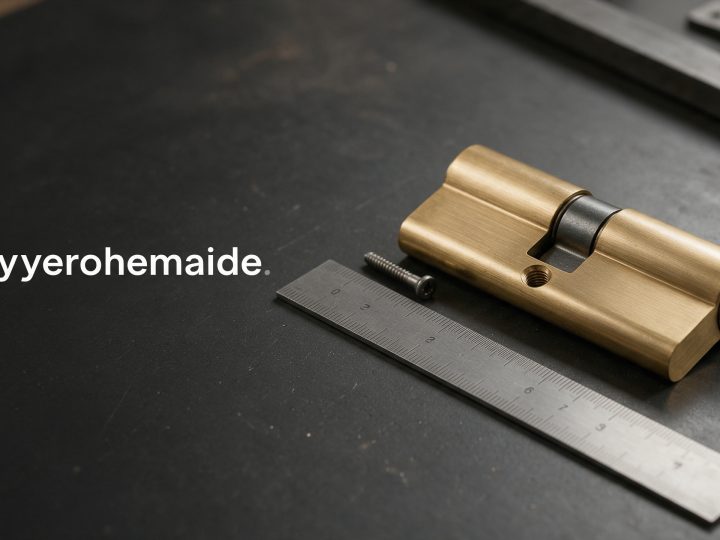
If your key goes in but will not turn, stop applying force. You do not need to repeat the attempt to prove that the lock is stuck. If the door is already open, leave it open. Keep the key intact and note what has happened without putting products or tools into the keyway. Resistance felt at the cylinder does not prove the cylinder is at fault: door alignment or another part of the locking system may be involved.
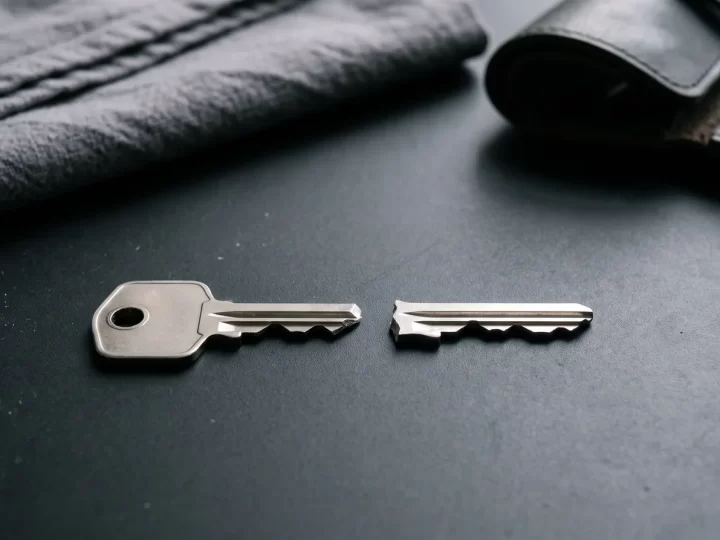
This guide is about an unbroken key. If a piece has snapped off inside, see our separate guide to a broken key in a lock. With an intact key, the useful first step is to distinguish an observable symptom from a cause that still needs an inspection.
GUIDANCE WITHOUT FORCE
Understand the symptom before moving the key
Five questions about what you have already observed. This does not open locks, make a definitive diagnosis or send your answers.
Three things to establish before blaming the cylinder
First, is anyone at risk? Smoke, a medical emergency or a vulnerable person you cannot reach calls for 112 and the emergency service’s instructions. A stiff lock without danger to a person is a different matter. Making that distinction early prevents a mechanical problem from delaying an urgent call.
Second, is the door already open? If so, do not close it to see whether another key works. You might lose the access you still have. Keep it supervised until the lock is dependable. If the door is closed, tell the locksmith whether it merely shut behind you or was locked with turns of the key. That information helps, but it does not by itself determine an opening method.
Third, what movement did you actually observe? A key that stops halfway into the keyway, a key that enters fully but will not rotate, and a key that rotates while the door remains shut are different problems. Describe the movement. You do not need to declare the cylinder broken or the door misaligned without an inspection.
When to stop: if the key bends, makes a cracking sound, needs a hard pull or only moves when you shove the door, stop. A broken key can turn a manageable fault into a more involved repair.
The key will not go all the way in
Do not push it further. An obstruction, a worn or incorrect key, a hidden fragment or a feature of the particular cylinder could explain the symptom. None of these can be confirmed simply from the outside. A photo of the exterior lock and door may help you describe the hardware; leave out your address and the complete profile of a key that could be copied.
Do not use a spare key as a probe. Pins, wires, glue and compressed air are poor experiments too. They may push a fragment deeper or introduce marks and residue where none existed. The simple statement “my usual key only goes halfway in; I did not force it” is useful information for a professional.
The key goes in fully but stops turning
It will not rotate at all
A total lack of rotation may involve the key, cylinder, another part of the lock or a model-specific feature. If you already know that an intact spare worked smoothly, mention it. Do not turn that spare into another forceful test. One working key points towards the first key, but does not prove that the rest of the door is correctly adjusted.
Try to recall whether the problem appeared suddenly or whether the key had needed an increasingly precise position. Visible wear, a bent key or gradually growing resistance are clues, not diagnoses. If you already know that one side worked and the other did not, mention that as well. There is no need to run further tests solely to fill out a checklist.
It turns slightly, then catches
Partial movement means something moved; it does not make extra force safe. On a multipoint door, resistance felt through the key may come from another locking point. A door leaf that rubs against its frame can also prevent the bolts from meeting their keeps. Internal wear remains possible. Only an inspection can separate these explanations.
Tell the locksmith where in the turn it stops: at the start, midway or near the end. Did it happen while opening or locking? Do not lift the door with your shoulder or make the key finish the turn by force. The weakest part may give way and make the repair harder.
It turns, but the door stays shut
That is no longer strictly a key that “will not turn”. The latch, transmission inside the lock or door-to-frame alignment may be involved. Do not pull on the key as a handle. Use the handle normally only if it works without resistance; if the door still does not open, stop experimenting. Say explicitly when you call that the key does turn. It changes the initial assessment.
Open door: preserve your advantage
Closing it “for a moment” to test a stiff mechanism risks turning a repair question into an access problem. The lock should first be checked without risking access, with an undamaged key and a method suited to that particular door. If resistance appears, stop the test. A locksmith can examine the cylinder, strike plate, hinges and locking points that the real door actually has.
An open door still needs supervision. Arrange for someone to watch the entrance while the fault is assessed, without blocking an emergency exit. After a repair, ask to see the lock operate with the door open before trusting it again.
Closed door: explain the problem without improvising entry
If you are outside, check only for another authorised and safe entrance. Do not force windows or shared building fittings. If you are inside, keep available exits clear. Regaining access and fixing the cause of resistance are separate goals. A quote should distinguish them when both are required.
When calling, say whether the key enters fully, how far it turned before stopping and whether the door was deadlocked. Mention rubbing only if you have actually observed it. Ask what the estimate covers: travel, time of day, opening, inspection, parts and tax. If an on-site assessment changes the scope, ask for the reason and the revised price before approving replacement parts. A responsible locksmith may also ask you to establish your right to enter.
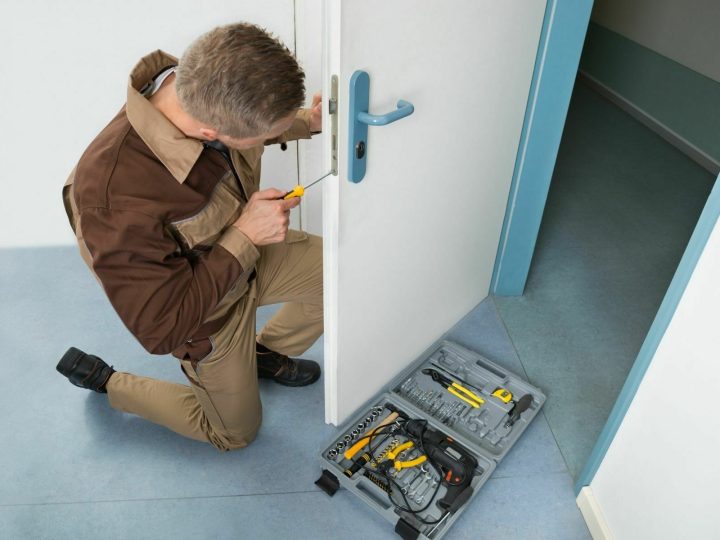
Our lock repair service in Lleida describes the intervention when a visit is needed. This article is for recognising and communicating the symptom; it is not a remote inspection.
Why oil is not a universal fix
ABUS cautions against ordinary oil, grease and graphite in precision cylinders because they can leave residue or clog components. For compatible products, it recommends purpose-made, non-greasy maintenance sprays. ASSA ABLOY likewise distinguishes lock spray from household oil and notes that keys and hinges wear. Those are maintenance guidelines, not a reason to spray an unknown blocked lock and hope for the best.
Follow the instructions for your exact model if you know it. Otherwise, ask before applying a product. A spray cannot straighten a misaligned door, repair a bent key or replace a failed component. Electronic systems may have additional restrictions.
Does a stiff key always mean a new cylinder?
No. An assessment may point to a worn key, an adjustment to the door, repair of another component or replacement of the cylinder. Several factors can coexist. The aim is dependable access and a clear explanation of the finding, not a default sale of parts.
If replacement is proposed, ask whether the new cylinder fits the door and security furniture, how many keys it includes and what documentation accompanies the work. A new cylinder alone will not fix a sagging door. Nor can anyone responsibly promise damage-free opening for every possible door without seeing its condition.
Prevention that is worth doing
Do not use the key to pull the door. Put aside copies that bend, show cracks or need an increasingly exact position. If you need a duplicate, ask about the correct reference and any authorised copying requirements. Repeatedly copying an already worn key can carry the same problem into its replacements.
A door that needs lifting, shoving or slamming to lock deserves attention. Follow the manufacturer’s maintenance guidance for the whole assembly, including hinges and alignment. The useful sign is not that you can force a turn, but that the key enters, turns and comes out smoothly while the door closes without correction.
Common questions
Can I try another key?
An intact spare that has previously worked smoothly can be a clue, especially with the door open. You do not need another test if the lock resists. With a closed door, repeated attempts with several keys may simply break one of them.
Why does it fail only when the door is closed?
That is consistent with alignment or locking-point trouble, but is not proof. Tell the locksmith about the difference. If the door is already open, do not close it to reproduce the fault.
Should I add oil or graphite?
Not as a general remedy. The manufacturers cited here advise against those substances in precision cylinders and specify appropriate maintenance products instead. Adding something at random does not identify the cause of a blockage.
What affects the price?
The door, time of day, need to regain access and any required parts all matter. A fixed figure before an assessment could mislead. Ask for travel, labour, opening and materials to be separated in the estimate.
What if the key is trapped and will not come out?
Do not pull it hard or use it as a lever. Explain whether the door is open, whether the key is bent and what movement you have already observed. Removing a trapped key may require a different intervention from a key that simply will not turn.
When a key resists, the next useful move is usually not a harder turn. Preserve access, describe the precise symptom and decide on work after the door is assessed. In Lleida, you can speak directly with Serralleria Catalana about the next step and the scope of the job.
Reviewed content
Professional experience behind this guide
Serralleria Catalana reviews this content against real work with openings, locks, cylinders, doors and safes in Lleida. When price depends on the door, time, hardware or diagnosis, we explain that before giving a fixed figure.
- Published
- 21/10/2026
- Updated
- 21/10/2026
- Reviewed by
- Serralleria Catalana
- Standard
- Local experience, proportionate security and clear pricing.

Professional locksmith in Lleida with over 25 years of experience. I write to help you protect your home wisely — no jargon, no fear.