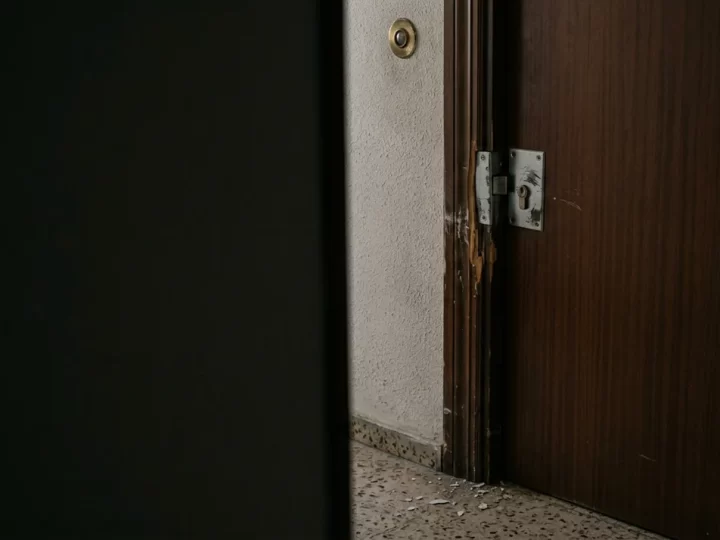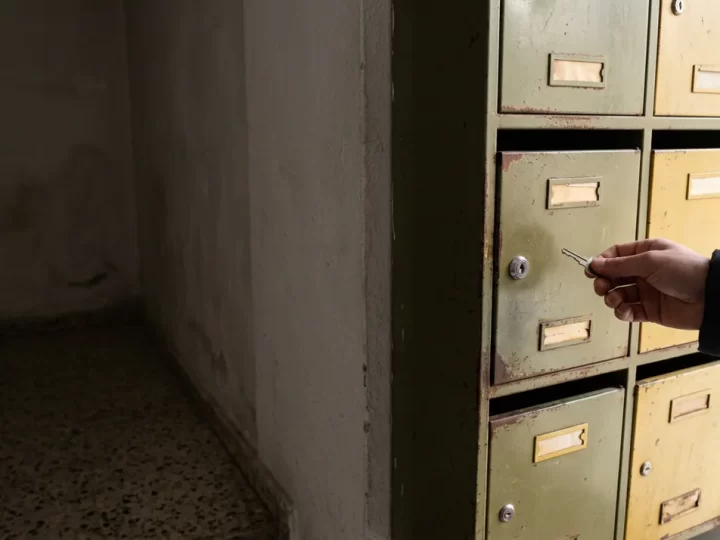
A double-clutch Euro cylinder may let an authorised key operate the lock from outside while another key remains in the inside keyway. It addresses a particular access problem. It does not guarantee that nobody will ever be locked out, and it does not by itself make a door more resistant to attack. A stiff mechanism, a latch that will not retract, or an independent inside bolt needs its own diagnosis.
The useful question is not which product has the most impressive label. Ask what must happen at this particular door when someone leaves a key on the other side. Identify who needs access, what cylinder is fitted, whether the door operates smoothly, and whether there are other locks. Similar marketing names can describe different configurations. Check the data sheet for the exact model and version that will be installed rather than assuming that a feature name tells the whole story.
What the double-clutch function actually does
A double-entry Euro cylinder has an outside and an inside keyway. On some cylinders, a key left in one side prevents a second key from operating the other side. A cylinder with a suitable emergency or double-clutch function is designed to let another valid key operate from the opposite side, within the conditions specified by its manufacturer. ABUS describes its emergency function in terms of a key left inserted on the other side. TESA documents a double-clutch configuration in its modular-cylinder manual. Neither description should be transferred automatically to an unidentified cylinder.
The word valid matters. This feature does not let a stranger open the door without a key or with an unauthorised copy. Nor does it release a broken lock case, realign a door, or override a separate bolt. If the outside key turns but the door stays shut, the difficulty may lie downstream from the cylinder. Treat the access function and the diagnosis of a mechanical fault as separate questions. Buying a new cylinder with the desired clutch while leaving a damaged lock case in place could leave the original problem untouched.
There is another distinction that short product descriptions often hide: a key merely inserted is not necessarily the same as one turned inside. Some manufacturers expressly describe operation when the inside key has been rotated; other descriptions are narrower. dormakaba distinguishes its priority and double-clutch BSZ functions within the matrix plus range. Before relying on a claim, establish which exact condition applies to the configuration offered for your door.
Ask this before buying: “With this model, in this size and version, can my authorised outside key work while another key is left inserted and turned inside?” Ask for the relevant manufacturer document and a demonstration with the door open.
The ordinary situation: a key is left inside
Imagine someone leaves the flat while another resident keeps a key in the inside cylinder. When the first person returns, their own key may not enter fully, or it may enter but refuse to turn. Forcing it does not add an emergency function to the cylinder. It can damage the key, cam or lock. Stop the attempt and clarify whether the door has merely latched or whether the main lock has also been turned. The answer affects the diagnosis and the work needed to regain access.
On a model whose relevant function has been verified, a second authorised key should be able to work from outside despite the inside key in the documented position. Yet the rest of the door still has to allow the lock to move. The outside key must be the correct one, the lock case must be functional, the leaf must not jam the bolts, and no secondary device may be engaged. If a person’s immediate safety is at stake, call emergency services on 112 rather than experimenting with the hardware.
This matters in homes where a relative or carer needs legitimate access if the resident cannot reach the door. The cylinder can be one element of an access plan, but it cannot replace the plan. Decide who holds the spare, who may authorise entry, how an emergency is recognised, and what other locks are fitted. The mechanical feature does not itself establish permission to enter someone else’s home.
OPEN-DOOR CHECK
What happens with a key on each side?
Observe without force. This guide cannot certify a cylinder or open a shut door.
With the door open, choose only what you have observed. Do not shut it to complete this check.
Local assessment: answers are not stored or sent.
Emergency, priority and double clutch are not universal synonyms
Retailers sometimes use “double clutch” as a convenient shorthand for operation from one side while a key remains on the other. Manufacturer manuals may use “emergency function”, “danger function”, “priority” or a product-specific code. They can describe different mechanisms and positions of the inside key. None of these words is a universal security certification. The exact model reference, operating conditions and compatibility with your door determine whether a purchase solves your particular problem.
dormakaba’s matrix plus documentation, for example, distinguishes a priority function PF from a double-clutch BSZ function. That distinction is a reminder to read beyond a shop headline. Ask the seller what happens with an inside key simply inserted, what happens after it is turned, and what happens if the lock has been fully thrown. If the answer is “all cylinders with this name do that”, request a data sheet for the proposed model rather than accepting the generalisation.
A thumbturn cylinder is another configuration. Because a knob replaces the inside keyway, there is no inside key to be left inserted on that side. It raises different questions about accessibility, the type of door and any requirements that apply to that installation. A fire-rated door, a communal entrance or a master-key system should not be altered on the basis of an attractive feature list alone. The specification must be checked against the actual door and whoever is responsible for it.
Double-clutch operation should also not be confused with controlled key copying, an anti-snap feature, or a protective external escutcheon. The first addresses legitimate operation from both sides; the others concern different security properties. A model might combine several, but one does not prove the presence of the others. If a quotation claims “high security” solely because a cylinder is double-clutch, ask which additional documented property supports that description.
Describe your existing lock before seeking a quotation
First establish whether the door uses a replaceable Euro-profile cylinder or another locking system. You do not need to dismantle the door to begin. A photograph of the outside fitting and the open door edge may help a locksmith identify the general arrangement. Do not publicly post your address, codes or a clear complete image of a working key. If you cannot identify the system, say so; a guessed cylinder type can lead to a part that will not fit.
Next describe what happens when two authorised keys are used while one remains inside. Does the outside key fail to enter, enter but not turn, turn without opening, or work normally? These outcomes point to different possibilities. The guide to a key that turns while the door stays shut covers that distinct fault. This article focuses on deciding whether an operating feature is useful, not on treating every lock problem as a clutch problem.
Notice whether the lock operates smoothly with the door open but feels stiff when the leaf is closed. That difference can indicate alignment, a rubbing leaf or resistance elsewhere in the assembly. A double-clutch mechanism does not move a strike plate or straighten hinges. Replacing a cylinder before establishing why a lock needs force may only transfer the load to the new part. Describe the symptom honestly instead of assuming a new feature is the repair.
List secondary closures too: an inside bolt, chain, night latch, second lock or electronic device. A perfectly functioning outside key in the main cylinder cannot necessarily defeat any of them. The full inventory matters most when the purpose is to help a vulnerable person or to preserve an authorised emergency route into the property.
How to make a cautious functional check
ABUS describes a simple way to check an emergency-function cylinder: keep the door open, leave a key inserted on the inside, and try the corresponding outside key. Keeping the door open is not a minor detail. It lets you observe the behaviour without risking lockout. Only make this check if you control both keys, the leaf is stable, and nobody can accidentally be shut in or out. Stop immediately if a key resists.
You do not need to close the door to “prove” it works. Do not use a bent key, add a tool for leverage, or repeat a stiff movement until something gives. To check behaviour with an inside key turned, consult the exact model’s instructions first. A home test cannot certify security performance or correct installation. It supplies one observation. If the evidence remains unclear, note the product reference and have a qualified person inspect it.
If you are already outside a locked door, this section is not a set of opening instructions. Tell the locksmith whether a key has been left inside, whether the lock was thrown, whether somebody is in the property and whether the door had been stiff beforehand. That information helps prepare the right response. It would be misleading to guarantee a damage-free opening or a fixed price before seeing the situation.
A feature is useless if the new cylinder does not fit
Euro-profile cylinders come in many lengths, and the outside and inside halves need not be equal. Measure from the centre of the fixing screw to each side, not from the edge of the door or the handle. The separate guide to measuring a Euro cylinder explains that process. For this purchase, obtain the correct outside and inside lengths for the particular double-clutch model, and check how it sits with the existing escutcheon.
A correct total length is not enough if the halves are reversed. Excessive projection may leave part of the cylinder unnecessarily exposed; too little reach can make the lock awkward or interfere with a fitting. TESA’s modular-cylinder manual shows how sizes and certain components are specific to a configuration. Ask for the exact reference rather than ordering an internal part based only on a photograph or a generic marketing description.
Check the key profile, cam, lock case, outside fitting and any restrictions on armoured or proprietary doors. If a cylinder is part of a master-key system, a communal arrangement or a business access plan, a generic replacement could break legitimate access. Some keys have limited permissions. Do not assume every existing key will operate every new cylinder or that an old spare remains useful after the change.
Planning a smart lock? Some inside-mounted motors keep a key permanently engaged and therefore require outside emergency-function operation. Other products use different attachments. The ABUS LOXERIS One instructions, for example, specify an emergency and danger function for that particular device; its requirement is not a rule for every smart lock. Compare both the motor and cylinder manuals. The guide to choosing a compatible smart lock deals with the wider product choice.
Separate everyday convenience from resistance to attack
The direct advantage is operational: a legitimate second key may remain usable from outside when another is left on the inside. That can remove one cause of accidental lockout and support a sensible access arrangement. It does not by itself make a weak door strong, invalidate lost keys, or demonstrate resistance to drilling, extraction, snapping or manipulation. When such properties are claimed, identify the product that has them and assess the fitting, lock case and door as a whole.
Leaving a key in the inside cylinder should not be treated as a security strategy. Here the relevant question is what happens if it is left there unintentionally. If a key is missing or nobody knows who has copies, you have a different access-control concern. The clutch function will not revoke old keys. Depending on the system, the right response may involve a controlled replacement or rekeying decision, not merely an added convenience feature.
Nor does an outside key guarantee emergency access. The person who holds it may be absent; a second closure may be set; the mechanism can fail. Discuss who holds authorised spares, when they may be used and how the door is maintained. For an immediate medical or personal safety risk, use 112. A clear human plan matters at least as much as a product feature in that situation.
What your observation cannot establish
If the outside key will not turn while another key is inside, it is tempting to call the cylinder old or defective. That does not follow. Some cylinders behave this way by design, while others include a function to avoid it. The behaviour alone says nothing reliable about burglary resistance. Evaluate everyday operation, documented resistance claims and the quality of installation separately. Mixing these questions can lead to paying for a feature that never addresses the cause of the complaint.
Likewise, a key that enters badly does not automatically show that the clutch is at fault. A worn copy, a misaligned fitting, dirt, pressure from the door or a fault within the cylinder can produce similar symptoms. Do not add an arbitrary lubricant or create more leverage with tools without checking the manufacturer’s advice. Record which side misbehaves, whether all authorised keys show the same symptom, and whether it changes when the door is open. Those observations help a professional narrow the diagnosis.
A successful demonstration with the door open has a limit: it shows how the cylinder operates in that position, but not why a closed door may demand extra force. After installation, the door still needs an ordinary smooth closing check. If it works only when away from the frame, alignment deserves attention. Do not attribute a door repair to the clutch merely because a new cylinder was fitted at the same visit.
Finally, a security card accompanying a cylinder is not evidence of double-clutch operation. The card may help control requests for copies of certain keys; the clutch concerns operation from two sides. Ask for documentation about each property and store duplication information separately from routine spare keys. One impressive-looking card should never replace a careful model check.
When the feature makes sense and when to look elsewhere
A household where a key is often left inside
If the door otherwise works well, a cylinder with the verified emergency behaviour may be a practical upgrade. Confirm the position in which the inside key is usually left, the availability of two authorised keys, and a safe open-door test. Do not choose by the number of keys in the box. The documented operating condition and a correct fit are more important.
A stiff door or a key that turns without releasing it
Investigate the underlying fault first. Hinges, a strike, the lock case or handle may be involved. If a new cylinder would still have to force the mechanism, double-clutch operation is not the first answer. Ask the locksmith to distinguish an adjustment, a repair and a replacement so that the proposed work addresses the symptom you actually have.
Access for a relative or carer
The feature can help, provided the people involved have permission and a valid key. Identify any secondary closures and agree how a need for access will be recognised. Do not post clear key photographs or codes in a group chat “just in case”. A useful arrangement respects the resident’s wishes and gives authorised helpers a realistic, lawful course of action.
A communal door, office or master-key installation
Ask the system manager before replacing a cylinder. Key hierarchy, limited permissions, maintenance obligations or fire-door requirements may apply. The visible shape of a cylinder cannot tell you all of that. A quotation that does not explain how authorised access will be preserved is not ready to accept.
Information a useful quotation should contain
Ask for manufacturer, model, reference, outside and inside dimensions, exact emergency or double-clutch version, number of keys and any copying conditions. The quotation should separate product, installation, call-out and taxes, and explain what happens if a further fault is discovered. “Security cylinder” is too vague for a meaningful comparison. “Double clutch” is also too vague without confirmation of the key position that concerns you.
Find out who will test the operation with the door open, what checks follow fitting, and which documentation you will receive. If the chosen system uses a security card, obtain the original and the procedure for ordering authorised copies. Count the keys supplied. Keep the invoice and reference without sharing the card code. If the old cylinder is to be retained, decide who stores it and how its old keys will be controlled.
Price depends on the part, its measurements, the existing fitting, the complexity of the door and the work actually required. A universal price for a door nobody has identified would not be honest. A cheaper offer may omit the important feature; an expensive one proves nothing by itself. Compare verifiable specifications and work scope, not reassuring adjectives.
Four checks after fitting, with the door open
First, confirm that each undamaged key enters and leaves the intended side smoothly. Second, operate the lock while the leaf is open without pushing or lifting it. Third, reproduce the reason for the purchase in a controlled way: one authorised key on one side and another on the opposite side, following the manual for the exact model. Fourth, check that the external fitting is correctly seated and that normal closing does not create unusual resistance.
If any check fails, do not shut the door to “see whether it improves”. Ask the installer to identify the cause before considering the work complete. One successful test is not a lifetime guarantee or a security certificate. Keep the model, instructions, invoice and installer details. If new stiffness appears later, stop forcing the key and have the mechanism checked before an inconvenience becomes a lockout.
Frequently asked questions
Will it always open from outside with a key inside?
Only if that specific model covers the inside key’s position, the outside key is authorised and the rest of the door works. An independent inside bolt can still prevent entry. Ask for a model-specific data sheet instead of a universal promise.
Does double clutch mean anti-bump or anti-snap?
No. Double-clutch describes legitimate operation from both sides. Resistance to manipulation, snapping or other attacks must be assessed separately for the stated product and installation. One feature does not imply the other.
Can I use it with a smart lock?
That depends on the motor, cylinder and door. Some devices keep an inside key engaged and need an outside emergency function. Others work differently. Compare both manuals and confirm dimensions before ordering.
Must I replace the whole lock?
Possibly not if a replaceable Euro cylinder is fitted and the rest of the lock works well. Integrated, proprietary or damaged mechanisms may need another solution. Identify the hardware first, then request a responsible quotation.
Should I test it with the door closed?
Start with the door open. Control both keys, avoid trapping anybody and do not force a stiff movement. If it fails, stop and check the documentation or ask a professional rather than risking a lockout.
What if the inside key has been turned?
That is a model-specific condition to check before purchase. Some data sheets expressly cover a turned inside key; others mention only a key inserted. The label alone cannot settle it.
Is it suitable for a communal door?
Do not decide in isolation. The door may be part of a master-key or escape system with specific permissions and requirements. Ask the responsible manager and consult the system documentation before changing a cylinder.
If a key left inside is the problem, tell us how your door behaves now, which lock you have and who needs legitimate access. We can help determine whether an emergency-function cylinder fits or whether a different fault should be addressed first.
Reviewed content
Professional experience behind this guide
Serralleria Catalana reviews this content against real work with openings, locks, cylinders, doors and safes in Lleida. When price depends on the door, time, hardware or diagnosis, we explain that before giving a fixed figure.
- Published
- 07/11/2026
- Updated
- 05/11/2026
- Reviewed by
- Serralleria Catalana
- Standard
- Local experience, proportionate security and clear pricing.

Professional locksmith in Lleida with over 25 years of experience. I write to help you protect your home wisely — no jargon, no fear.